


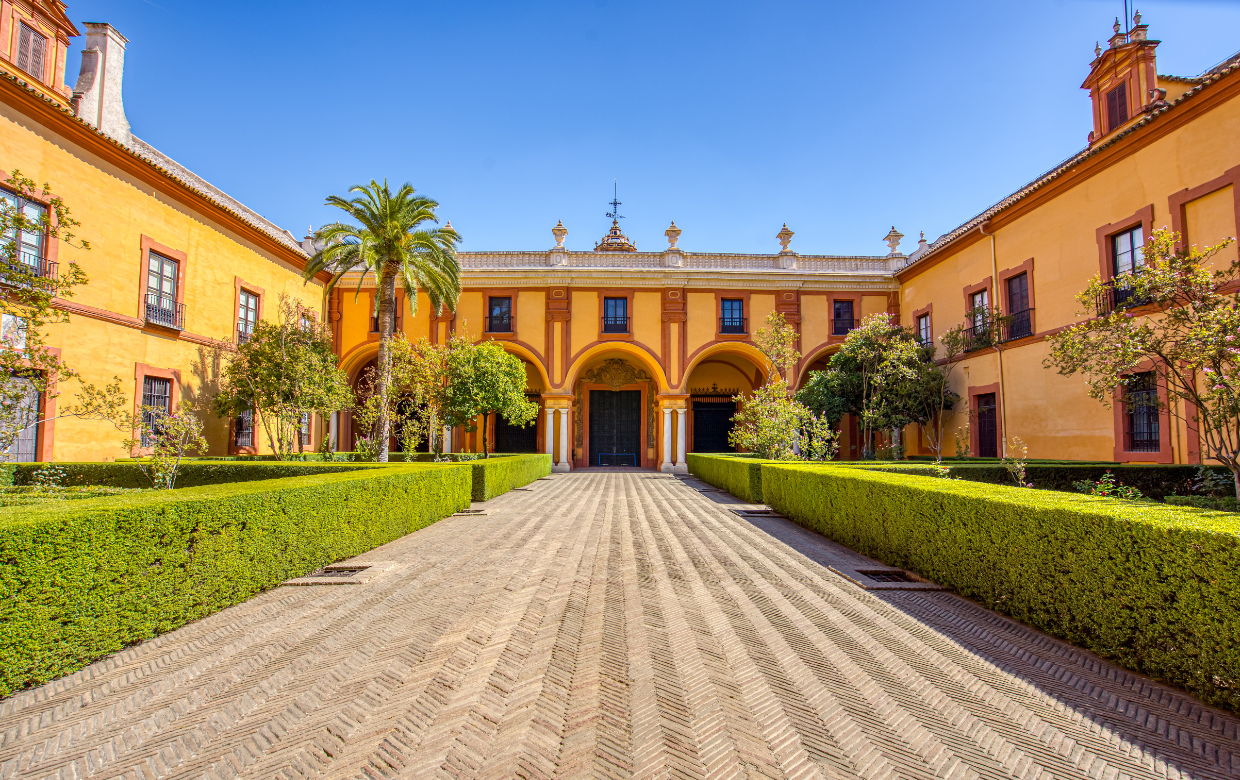
The history of the Real Alcázar of Seville is a fascinating journey through centuries of cultures, styles, and kings. This royal palace, one of the oldest still in use in the world, has witnessed Seville’s evolution from the Islamic era to the present day. Its architecture, gardens, and legends make it a must-see for lovers of art and history.
The Origins of the Real Alcázar of Seville
From a Muslim fortress to a royal palace
The Real Alcázar of Seville has its roots in the Muslim era, when a fortress was built in the 10th century under the rule of Caliph Abd al-Rahman III. This initial fortification laid the foundation for what would eventually become a majestic royal palace. Following the Christian conquest of Seville in 1248, the Alcázar was adapted and expanded to serve as a residence for the Castilian monarchs, becoming a symbol of royal power in the city.
Evolution Through the Centuries
Over the centuries, the Alcázar has undergone numerous architectural transformations, reflecting the diverse cultures and styles that have influenced Seville. From its Islamic origins, through the splendor of Mudejar art, to the Gothic, Renaissance, and Baroque additions, the palace complex has constantly evolved. This blend of styles makes the Alcázar a unique example of Andalusia’s cultural richness.
Architecture and Art in the History of the Real Alcázar of Seville
The Splendor of Mudejar Art
One of the Alcázar’s most notable features is its Mudejar architecture, a fusion of Islamic and Christian elements that is evident in intricate plasterwork, horseshoe arches, and colorful tiles. This style is particularly evident in the Palace of Peter I, built in the 14th century, which combines Islamic aesthetics with the needs of a Christian court.
Gothic, Renaissance, and Baroque influences
In addition to the Mudejar style, the Alcázar incorporates elements from other architectural styles. The Gothic Palace, commissioned by Alfonso X in the 13th century, features characteristics typical of European Gothic architecture. Later, Renaissance and Baroque details were added, such as the tiled altar created in 1504 by Francisco Niculoso Pisano and various decorative elements in the gardens and halls.

Iconic Spaces of the Alcázar
Courtyard of the Maidens and Hall of Ambassadors
The Patio de las Doncellas is one of the most iconic spots in the Alcázar, with its central pond and marble columns that reflect the elegance of Mudejar art. The Hall of Ambassadors, meanwhile, stands out for its impressive gilded dome and rich decoration; it was the venue where royal audiences were held.

Gardens That Tell the Story of the Real Alcázar of Seville
The Alcázar Gardens are a true oasis in the heart of Seville. Featuring a blend of Islamic and Renaissance styles, these gardens are home to a wide variety of plant species, fountains, and ponds. Notable among them are the Mercury Pond, adorned with a statue of the Roman god, and the Grotesque Gallery, a decorative structure offering panoramic views of the complex.

The Living Legacy in the History of the Real Alcázar of Seville
World Heritage Site and Royal Residence
In 1987, the Real Alcázar of Seville was designated a UNESCO World Heritage Site, along with the Seville Cathedral and the Archivo de Indias. Furthermore, it remains the official residence of the Spanish royal family when they visit the city, making it the oldest royal palace still in use in Europe.
The Alcázar in Film and Television
The beauty of the Alcázar has captured the attention of filmmakers and television producers. One of the best-known examples is its appearance in the series “Game of Thrones,” where it was used as a set to depict the Water Gardens of Dorne. This media exposure has further increased its popularity among tourists.
Tips for Visiting the Real Alcázar in Seville
Schedule and Tickets
To avoid long lines, we recommend purchasing tickets in advance. You can easily do so on our website dedicated to the monument: realalcazar.ticket-sevilla.es. Visiting hours vary by season, so it’s a good idea to check them in advance. In addition, guided tours are available that offer a more enriching experience by providing historical context and architectural details.
What Not to Miss During Your Visit
As you explore the Alcázar, be sure to visit the Palace of Peter I, the Hall of Ambassadors, the Courtyard of the Maidens, and the lush gardens. Every corner of the complex offers a unique glimpse into the history and architecture that have made it one of Spain’s most important monuments.
Interesting Facts About the Real Alcázar of Seville
Orange marmalade for the British royal family
A little-known fact is that the bitter oranges from the Alcázar gardens have been used to make the marmalade served at the British royal family’s breakfast. This tradition reflects the historical and cultural connection between Spain and the United Kingdom.
The water organ at the Estanque de Mercurio
The Mercury Pond is notable not only for its central statue, but also for housing a water organ—one of the few in Europe. This musical instrument, powered by the flow of water, adds a sonic element to the sensory experience of the gardens.
Conclusion: A Living Treasure of Spanish History
The history of the Real Alcázar of Seville lives on not only within its walls, but also in every visitor who wanders through its courtyards and gardens, steeped in memory. The Real Alcázar of Seville is much more than a historical monument; it is a living testament to Spain’s rich and diverse history. Its unique architecture, which blends styles from different eras and cultures, along with its continued use as a royal residence, makes it a must-see for any visitor to Seville. Exploring its halls and gardens is like embarking on a journey through time, discovering the traces of the civilizations that have left their mark on this exceptional palace.
Follow us to discover more treasures
Want more tips, fun facts, and different itineraries?
Don’t miss what we share each week on our social media: